SAIWENNA / FABRIC ENGINEERING
How to Read Roller Shade Fabric Optical Data: Ts, Rs, As, Tv and g-tot
A fabric code can have several percentages beside it, each answering a different question. Read the column heading, test basis and exact color before comparing values. This guide helps a specifier turn a data sheet into a traceable material comparison; it does not assign performance values to an undocumented Saiwenna fabric.
Keep four kinds of information apart
| Field | What it describes | What it cannot establish alone |
|---|---|---|
| Openness factor | The open area of the weave | Nighttime privacy or a complete optical/thermal result |
| Ts / Rs / As | Solar energy transmitted, reflected and absorbed by the tested fabric | Energy savings for a particular occupied building |
| Tv or VLT | Visible light transmitted through the material | A universal percentage reduction in perceived glare |
| SHGC / g-tot in a glass-and-blind table | The reported performance of the specified glazing and shading combination | The result with any different glass, mounting condition or orientation |
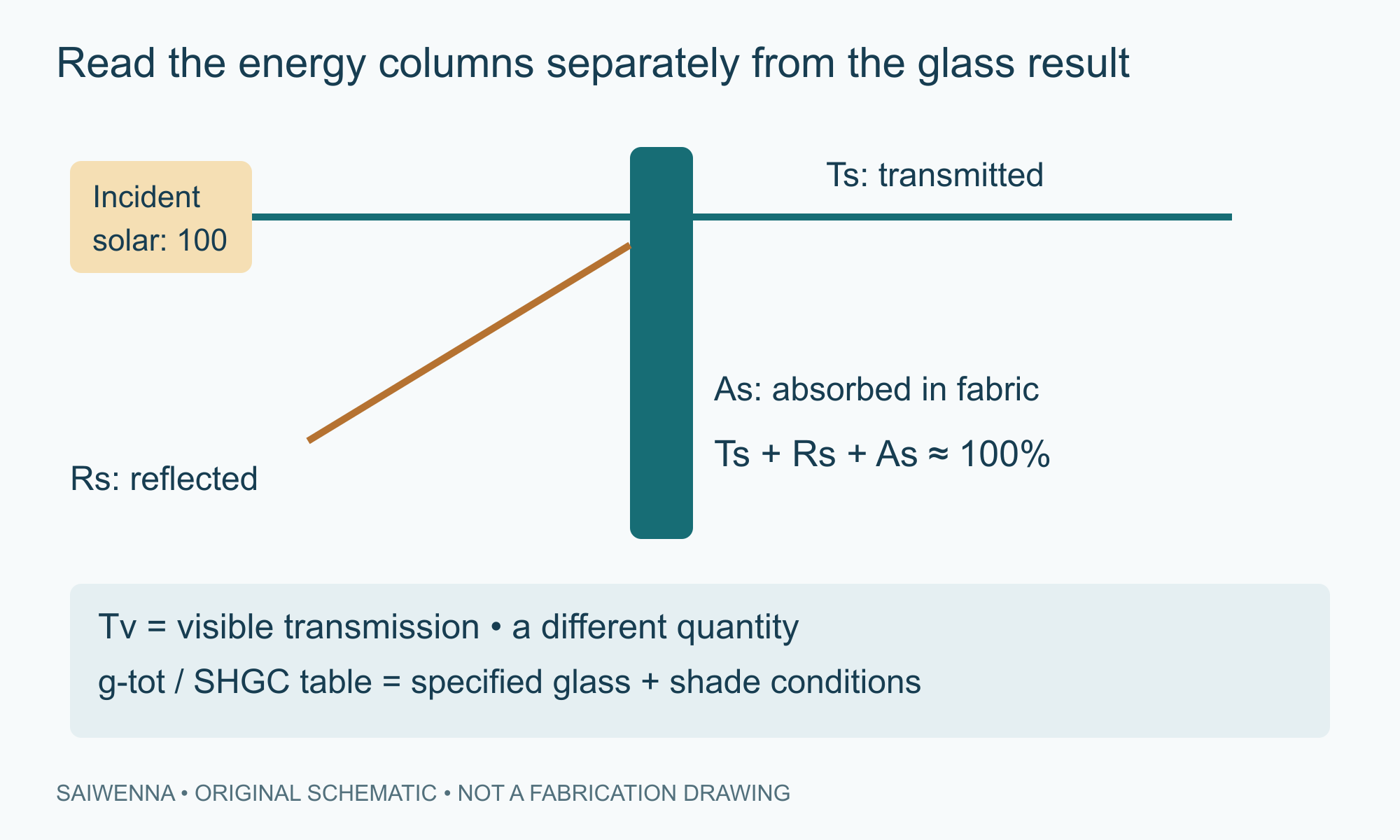
For a consistent solar-energy accounting basis, Ts + Rs + As should total about 100%; rounding can affect the displayed sum. Tv is a separate visible-light quantity and does not belong in that sum. An openness value should not replace either quantity.
Use the openness and sample-selection guide for the broader room and privacy decision. The task here is narrower: checking exactly what a particular data row measures.
Read one real row, then check its limits
Phifer’s SheerWeave 5000 swatch card, version v24-072624, lists the following for color P60 Bamboo/Birch. This is an attributed manufacturer example, not a Saiwenna supply offer or a substitute material.
| Code | Ts | Rs | As | Tv | g-tot: single ¼″ clear glass | g-tot: insulating 1″ heat-absorbing glass |
|---|---|---|---|---|---|---|
| 5000 P60 | 21 | 59 | 20 | 18 | 0.34 | 0.24 |
- Check identity. Keep the collection and color together. Another color in the same collection can have different values.
- Check the accounting. 21 + 59 + 20 = 100. This confirms the arithmetic of these displayed solar columns, not the accuracy or applicability of a laboratory result.
- Keep visible light separate. Tv is 18 in this row; it is neither the sum above nor a direct promise of room comfort.
- Read both glazing headings. The same fabric has two reported g-tot values under two stated glazing conditions. Taking 0.24 into a different window schedule without checking the glass would remove an essential condition.
- Retain installation assumptions. The card identifies internal installation and zero-degree profile angle. Compare the project condition with the original report or manufacturer data before using a value in analysis.
Compare like with like
Build the comparison from exact codes rather than descriptions such as “white 3% screen.” Record the face presented toward the glass where the source distinguishes face and back, and keep the measurement basis or reference report. If two sheets use different glass or conditions, mark their combined-performance columns as not directly comparable.
When a source provides only a summary number, request its underlying basis for the selected material. A low visible-transmission figure may inform glare assessment, but the room’s viewing direction, bright sources, glazing and controls still matter. Avoid rewriting a fabric percentage as a guaranteed reduction in discomfort or energy use.
Likewise, daytime outward view does not prove privacy with indoor lights on after dark. Assess the actual sample under the relevant lighting. A blackout fabric also leaves the finished assembly’s edge gaps, channels and interfaces to be reviewed separately.
A worksheet for the material decision
- Material identity
- Manufacturer ______ Collection ______ Color/code ______ Face/back ______
- Source identity
- Document/revision ______ Page or table ______ Test/report basis ______
- Fabric properties
- Openness ______ Ts ______ Rs ______ As ______ Tv/VLT ______
- Combined performance
- Glass type ______ Installation ______ Profile angle ______ g-tot/SHGC ______
- Project objective
- Glare / outward view / privacy / heat / other ______ Priority ______
- Sample observation
- Location and lighting ______ Viewing directions ______ Result ______
- Unresolved comparison
- Missing or inconsistent fields ______ Confirmation owner ______
Carry the accepted fabric into the shade specification
The optical decision is one part of a complete shade configuration. Preserve the approved code and document version alongside fabric width, orientation and seams. Review those manufacturing questions with the railroading and seam guide, and keep material thickness and roll build-up in the physical section review.
Then match the fabric and shade dimensions with the tube, drive and mounting configuration in the roller technical pack. Saiwenna’s currently published catalog category or color code alone does not establish tested optical properties, current stock or a confirmed sample scope.
Prepare a fabric sample review Include the exact source row, project objective and unresolved comparison so the next discussion addresses a defined decision.
Sources and scope
- Phifer SheerWeave 5000 swatch card, v24-072624, solar-optical table and glazing notes
- Crestron Shading Solutions, Fabric Fenestration Data (solar-energy definitions)
- Mermet USA, Fabric Selection (project objectives and visible-transmission distinction)
Technical reference reviewed 20 October 2026. Manufacturer examples retain their own product scope. Final supply, pricing, lead time and project suitability require configuration-specific confirmation.