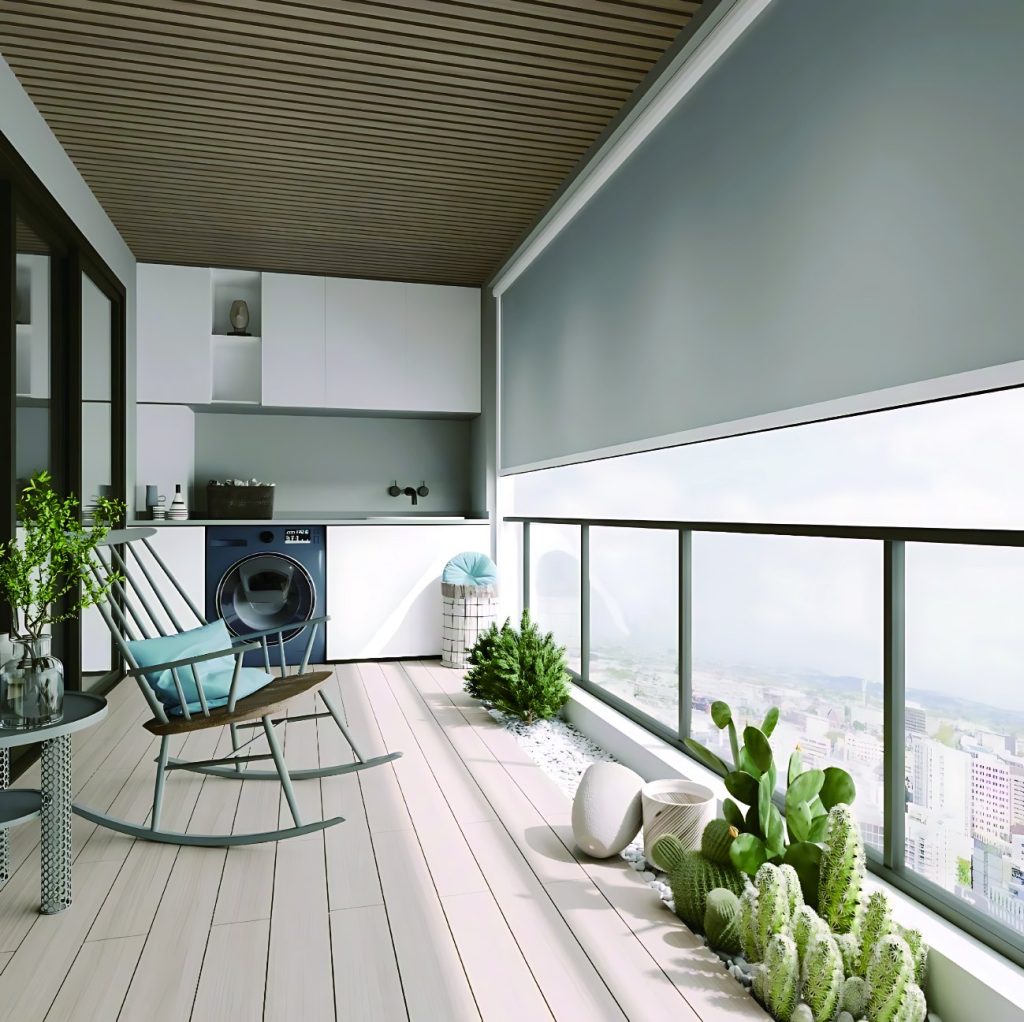
Saiwenna Outdoor Shading Systems
Motorized Outdoor Zip Screens
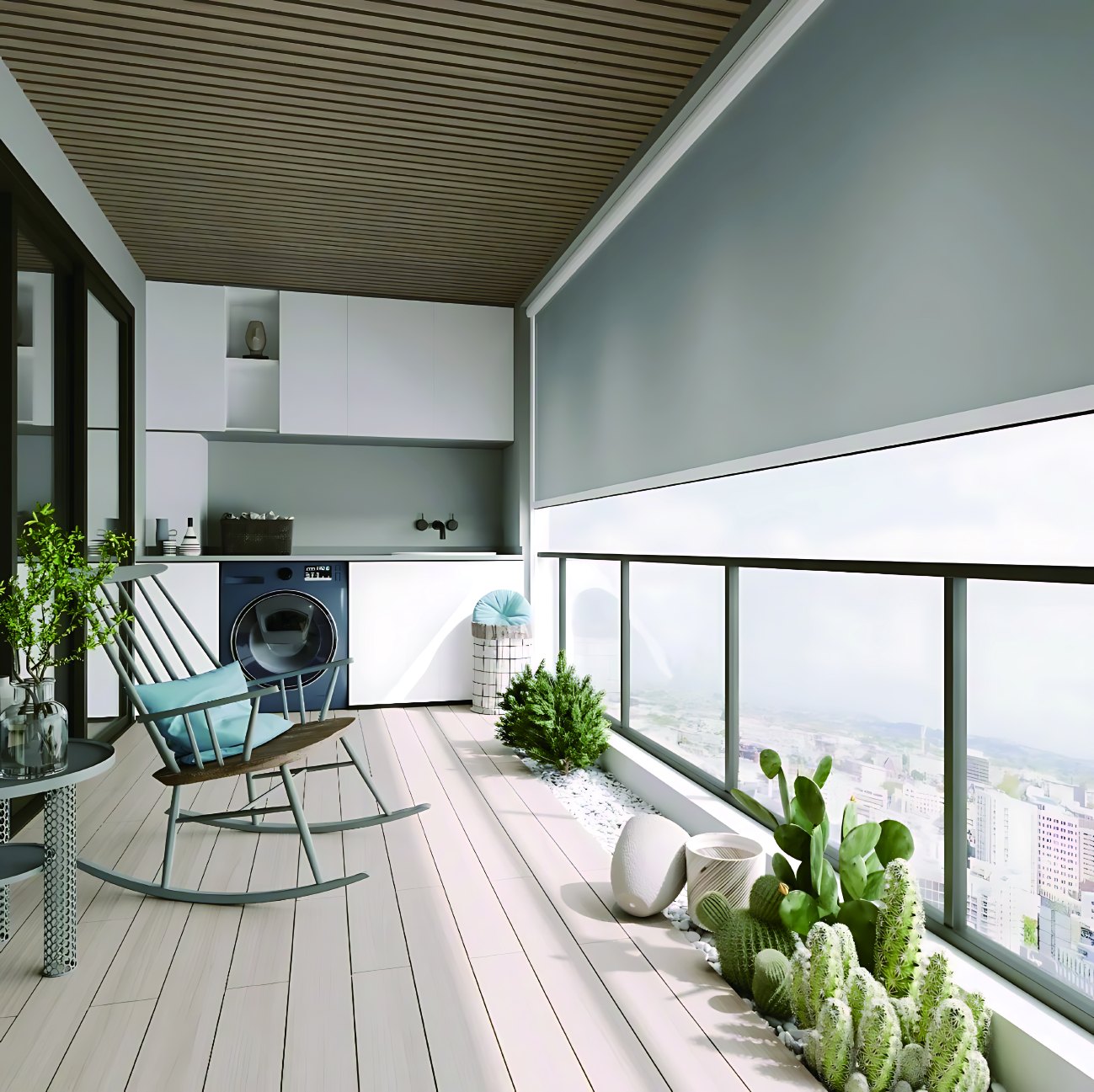
A motorized outdoor zip screen is a vertical fabric shade whose side zippers remain captured inside guide rails as the screen moves.
What Is a Motorized Outdoor Zip Screen?
A motorized outdoor zip screen is a vertical fabric shade whose side zippers remain captured inside guide rails as the screen moves.
Best-Fit Applications
Balconies, pergola sides, and facade openings
Large vertical openings needing guided fabric edges
Projects balancing shading with selected outward-view openness
Not ideal for
It is not an overhead roof and does not provide the rigid slat construction of an aluminum roller shutter.
How the System Works
The motor turns the roller tube while the fabric edges travel inside side-guide channels. A guided bottom bar closes the lower edge. An obstacle-stop function may be available and must be confirmed with the final motor and controller.
Key Structural Differences
Unlike an indoor free-hanging roller blind, the fabric edges are retained in exterior guide rails. Unlike an aluminum roller shutter, the closing element is fabric, so fabric openness and view are part of product selection.
Available Configurations
- 108 mm series: up to 5 m width or 4 m height as separate envelope limits
- 135 mm series: up to 6 m width or 4 m height as separate envelope limits
- Width and height cannot both exceed 3 m; final size pairing requires configuration review
- Blackout and screen fabric directions with approximately 3%, 4–5%, and 14% openness
- Motor and obstacle-stop direction subject to final motor confirmation
Materials and Finishes
The system uses an aluminum housing, side guides, roller tube, retained-edge fabric, and bottom bar. Available fabric series include polyester/PVC and fiberglass/PVC compositions. Exact openness, composition, color, and suitability must be tied to the selected sample.
Motorization and Control
Motorized operation is documented. Remote, wall, app, gateway, group, sensor, or building-system functions remain dependent on the final motor and controller.
Compatibility is confirmed only after the final motor, controller, wiring, gateway, and project configuration are selected.
Project and Installation Considerations
- Measure finished clear width and height
- Choose reveal or face-fix arrangement
- Confirm headbox and guide-rail space
- Select openness based on view, privacy, and shading intent
- Coordinate power, cable exit, bottom clearance, and fixing substrate
- Provide any required wind or load standard for engineering review
Technical Reference
| Item | Documented reference |
|---|---|
| 108-series reference | Up to 5 m width or 4 m height as separate envelope limits |
| 135-series reference | Up to 6 m width or 4 m height as separate envelope limits |
| Combined-size rule | Both dimensions cannot exceed 3 m simultaneously; final pairing requires review |
| Fabric directions | Blackout and multiple documented openness series |
| Edge retention | Zipper fabric edges captured in side guides |
These documented references define the available configuration envelope. Final engineering, local compliance, supporting structure, and installation remain project-specific.
Project Buyer Checklist
- Finished opening width and height
- 108 or 135 series review
- Reveal or face-fix mounting
- Fabric openness/color
- Headbox, guide, and cable positions
- Motor/control request
- Quantity, destination, and site photos
What We Need for Quotation
Send the selected product direction, dimensions, quantity, drawings, mounting conditions, finish, control request, destination, and site photos. Saiwenna will confirm the applicable documented series and identify any data still needed before quotation.
Frequently Asked Questions
Is a zip screen the same as an exterior roller shutter?
No. A zip screen uses retained-edge fabric; a roller shutter uses rigid aluminum slats.
Can the screen be both 6 m wide and 4 m high?
No. Those values are separate envelope limits. Both dimensions cannot exceed 3 m simultaneously, and the final width/height combination requires configuration review.
What Information Is Needed for a Wind or Load Review?
Provide the required project standard, site exposure, finished width and height, mounting method, and supporting structure. Performance requirements must be confirmed for the selected screen configuration during engineering review.
Prepare a Project-Specific Configuration
Share drawings and site inputs before relying on a size or control reference. We will review the relevant system series and quotation scope.